
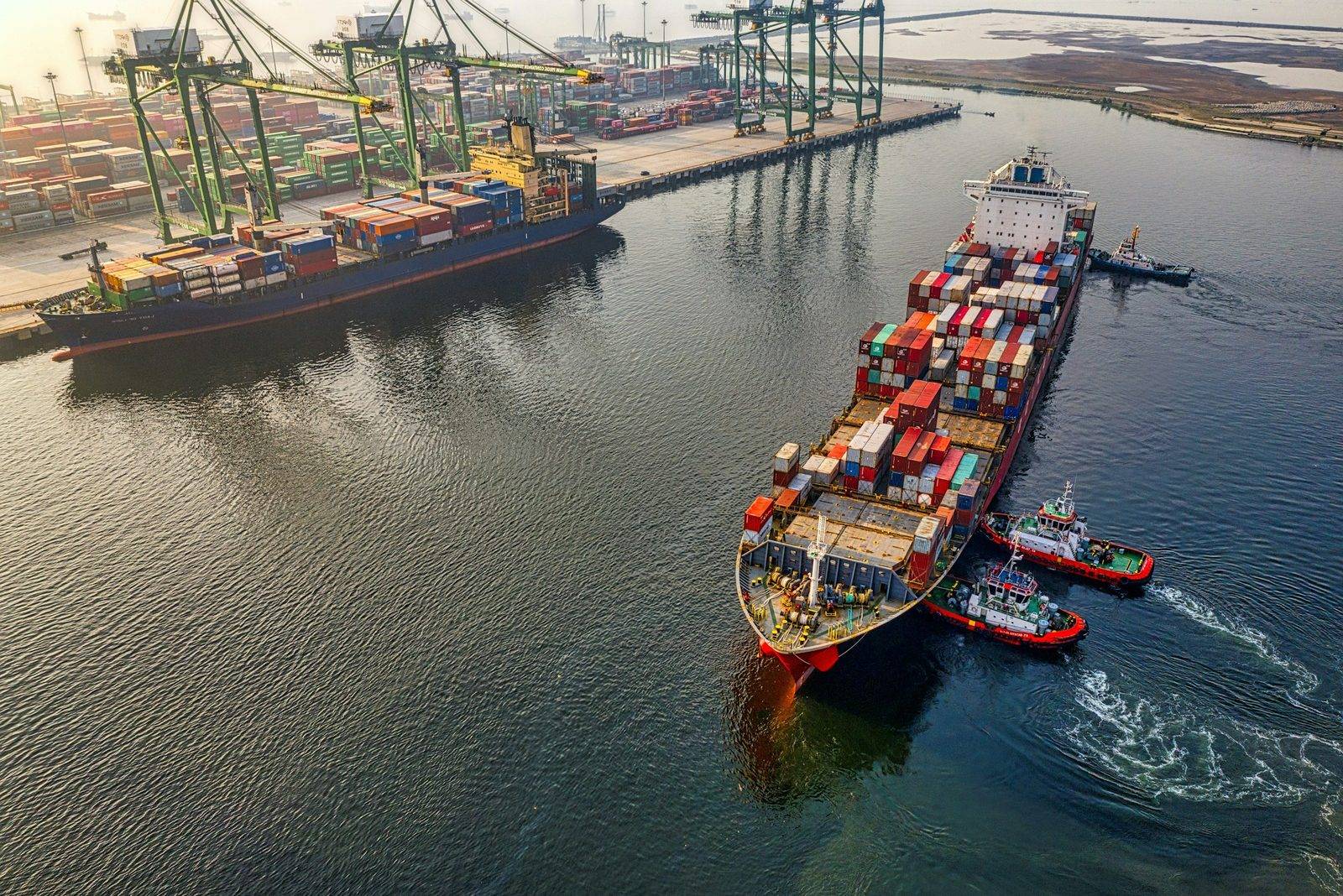
How sea freight reaches Azerbaijan
Azerbaijan has no direct access to the ocean: the Caspian Sea is landlocked and not connected to global shipping lines. Sea freight to Azerbaijan is therefore always multimodal — the container covers part of the journey by ship and the rest by rail or road.
The route depends on the port of loading, the cargo weight, the season and conditions at the transit ports. For cargo from European ports, the Black Sea route is the natural fit; for a container from China, both the Black Sea and the Caspian options are considered.
Depending on the cargo and the country of origin, the main options are:
- an ocean service to the Georgian Black Sea ports of Poti or Batumi, then rail or truck to Baku
- the Middle Corridor: from the Kazakh ports of Aktau or Kuryk by Caspian ferry to the Port of Baku at Alat
- other transit gateways when they work better for a specific cargo or season
FCL and LCL: full container or shared container
FCL (Full Container Load) means the container is filled with your goods only and sealed at origin. If your volume is close to a full box, FCL is both safer (your cargo is never handled alongside anyone else’s) and lower in cost per unit.
LCL (Less than Container Load) means your goods share a container with other importers’ cargo and you pay by volume. It suits a few pallets or a few dozen cartons, but consolidation and deconsolidation add some time to the journey.
Both formats are arranged on request; the operator quotes terms and price based on volume, weight and route.
Container types: 20ft, 40ft and 40ft HC
Standard dry containers come in three sizes. The right one depends on how dense your goods are: heavy cargo hits the weight limit first, light cargo runs out of space first.
- 20ft — for heavy, dense cargo: tiles, metal products, machinery, raw materials
- 40ft — for bulky cargo: furniture, household appliances, textiles
- 40ft High Cube (40HC) — for tall, light cargo: foam materials, rolls, goods in large packaging
Bill of lading (B/L) and other documents
The key document in ocean freight is the bill of lading (B/L). It evidences the contract of carriage and title to the goods. If an original B/L has been issued, the cargo is released only against it, so the paperwork has to arrive on time.
Customs needs a commercial invoice, a packing list, a certificate of origin where relevant and, depending on the goods, conformity, phytosanitary or veterinary certificates. Agree the Incoterms 2020 rule (FOB, CIF, EXW and so on) with your supplier upfront — it decides who pays for which leg.
Sometimes a telex release or a sea waybill is used instead of an original B/L — then there is no need to courier paper documents and the cargo is released faster. Agree this with your supplier in line with the payment terms.
Who sea freight is for
Shipping by sea is one of the most economical ways to move heavy, bulky cargo over long distances, but it is also the slowest. It suits planned purchasing, where a few extra weeks in transit are not a problem.
That typically means companies dealing in building materials, furniture, production equipment, raw materials and wholesale goods. An importer who orders stock months ahead can cut logistics costs noticeably by switching to container shipping.
On a long sea voyage, humidity and temperature change. Palletising cartons, putting desiccants in the container and securing the load inside significantly reduce the risk of damage; palletising and extra packing are offered as add-ons.
How to book container shipping to Baku
In your cargo request, give the description of the goods, approximate weight and volume, number of pieces, the supplier’s city and the agreed Incoterms rule. Flag any batteries, liquids or goods that need special inspection.
The operator sends a quote with the route and format (FCL or LCL). Once agreed, the cargo is collected from the supplier or received at the port, documents are checked and the shipment moves. Handover is at our warehouse in Baku. On the China, Türkiye and USA lanes, Freight + Customs (“Cargo”) is available; for other countries, customs clearance is a separate brokerage service on individual terms.