
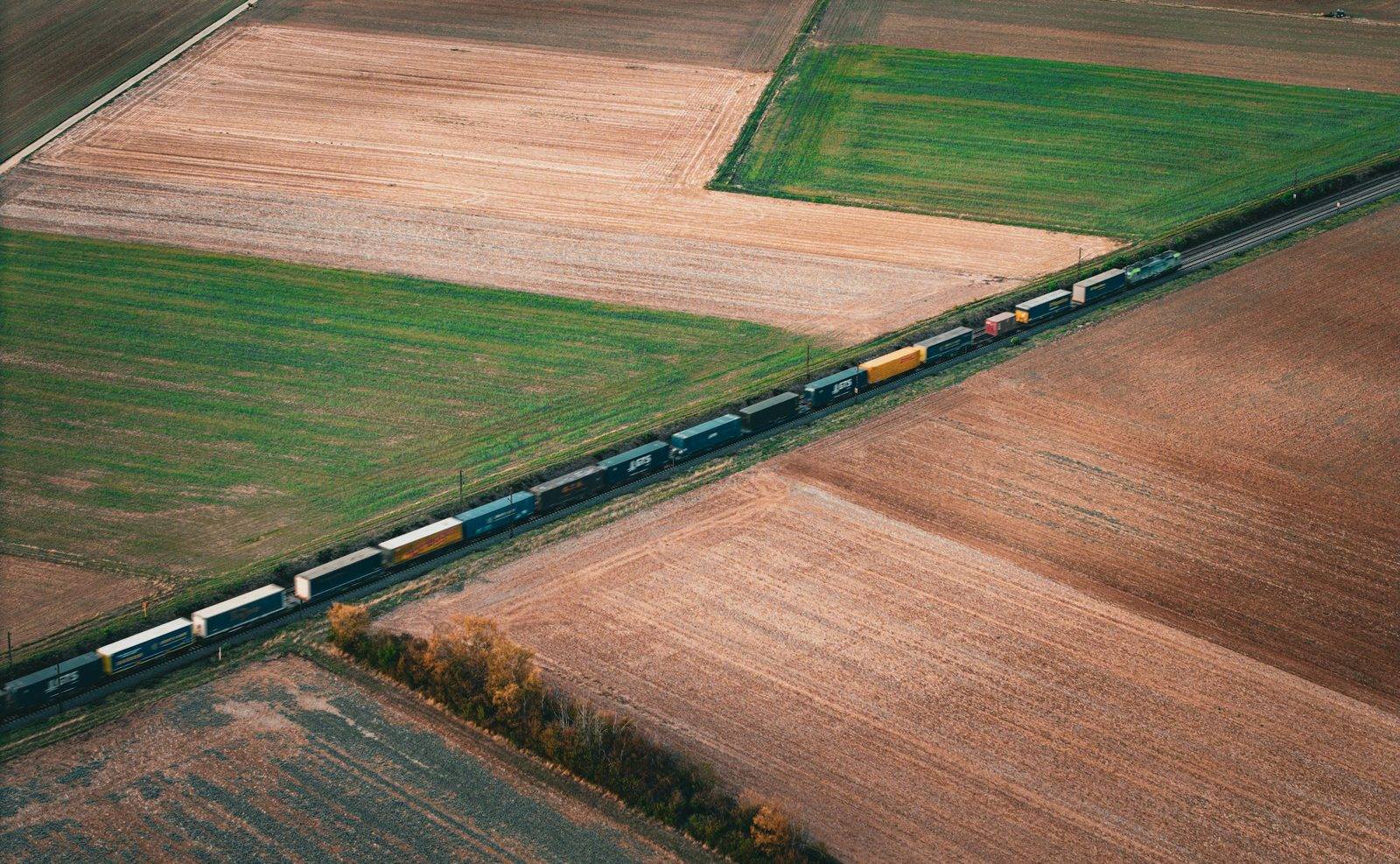
The Middle Corridor: China–Baku rail route
The Middle Corridor — officially the Trans-Caspian International Transport Route — links China with Türkiye and Europe through Kazakhstan, the Caspian Sea, Azerbaijan and Georgia. Azerbaijan sits at the centre of it, so China–Baku rail freight follows a natural transit path.
A typical routing: the container is loaded onto a train at an inland terminal in China, crosses Kazakhstan to the port of Aktau or Kuryk, then crosses the Caspian by ferry to the Port of Baku at Alat. From there it goes to our warehouse or continues west by rail.
The Baku–Tbilisi–Kars line: towards Türkiye and Europe
The Baku–Tbilisi–Kars railway connects Azerbaijan to the Turkish network via Georgia. It forms the western leg of the Middle Corridor and is also used for rail cargo from Türkiye and, through Türkiye, from Europe.
There is also a rail link between the Georgian ports of Poti and Batumi and Baku. A sea container landed at those ports often completes its trip by train — so rail is the second half of many sea freight moves too.
Container trains and consolidated cargo
Rail cargo mostly moves in standard 20ft and 40ft shipping containers. That lets it transfer between modes — train to ferry and back — without the box being opened.
Full containers are arranged on request. If you do not have enough for a whole container, your goods can be consolidated with other importers’ cargo and charged by chargeable weight, per kg. The operator sets out the format and terms in the quote.
The container is sealed at the loading point and the seal number is recorded in the documents. Seal integrity is checked at borders and ports, confirming the cargo has not been opened en route.
When rail makes sense
Rail is slower than air but considerably less expensive, and usually faster than sea. The Caspian crossing and border waits affect timing, so each shipment gets its own schedule.
Caspian ferry schedules also depend on the weather: in strong winds a ferry can be held in port. That makes rail a better fit for planned supply than for cargo with a hard deadline.
Rail freight to Azerbaijan works well for:
- bulky and heavy consignments: equipment, building materials, industrial goods
- regular supply — monthly or quarterly repeat orders
- cargo too heavy for air and too urgent for sea
- goods from China’s inland provinces, where trucking to a seaport adds time
Rail documents and customs
A rail shipment travels under an international railway consignment note — SMGS or the combined CIM/SMGS note. You also need a commercial invoice, a packing list and any certificates the goods require.
On import into Azerbaijan, duty is set by the HS code and 18% VAT is charged on the customs value plus duty. Goods originating in CIS countries such as Kazakhstan may be exempt from import duty with a valid ST-1 certificate of origin; confirm this for your specific goods in advance. For cargo from China and Türkiye, Freight + Customs (“Cargo”) is available; for other countries, customs clearance is a separate brokerage service.
Express and Economy are delivery speeds only, not transport modes. Whether your goods go by train, truck or another mode is decided by us based on the cargo, urgency and budget.
What to include in a rail freight request
The more precise the starting information, the faster and more realistic the rail freight quote. In your request, include:
Based on this, the operator proposes the route, the format and the customs option. Once agreed, the goods are received, measured, their documents checked and the final price confirmed.
- a description of the goods and, if possible, the HS code
- approximate weight, volume and number of pieces; palletised or loose cartons
- the supplier’s city and the date the goods will be ready
- whether you need a full container or the cargo can travel consolidated
- whether there are batteries, liquids or goods requiring special inspection